It’s intergenerational, it’s large scale, it’s working at the cutting edge and it’s producing some amazing results from a long-term pure Te Mania Angus enterprise.
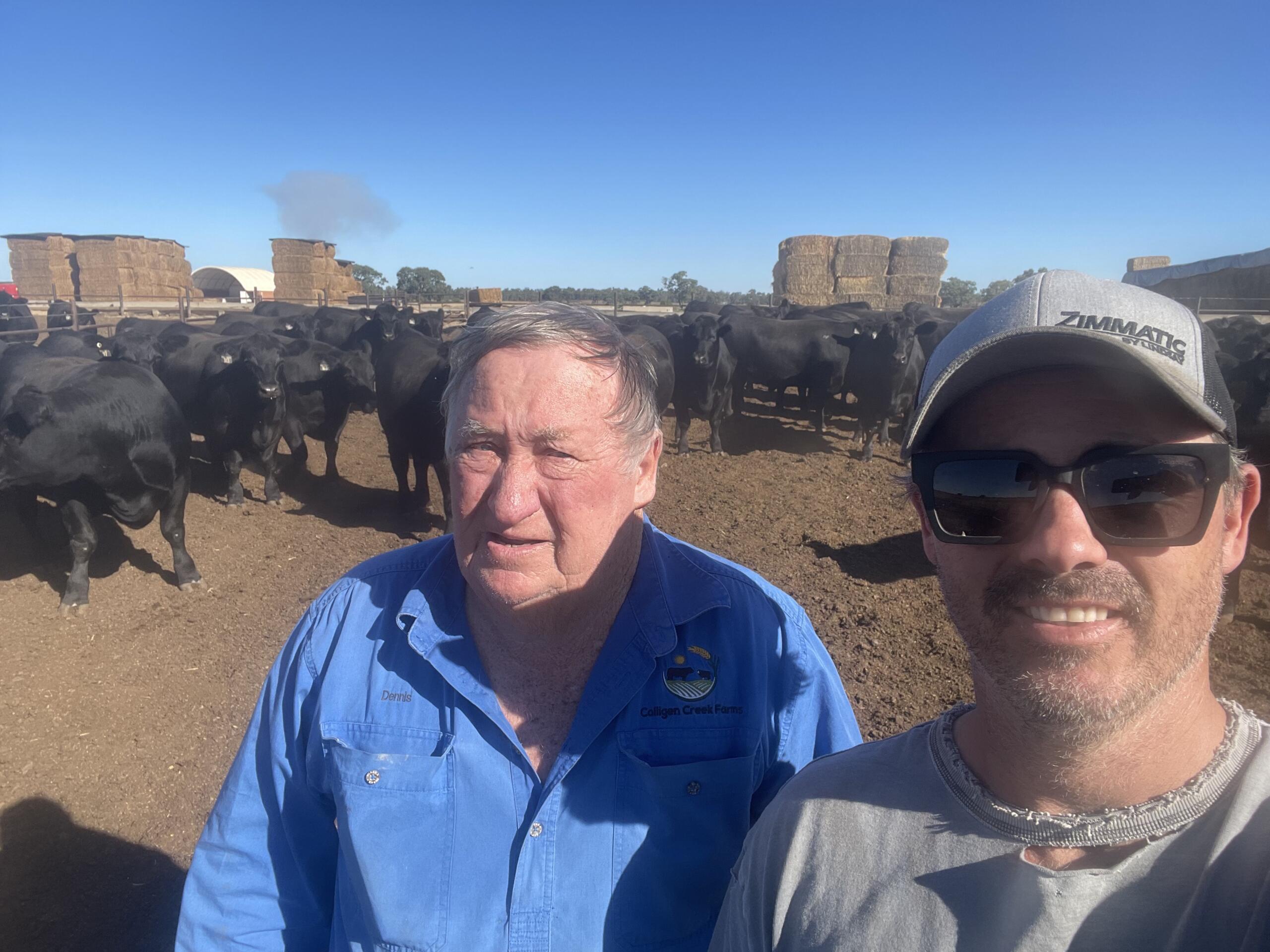
But at Colligen Creek Station near Deniliquin in the Riverina, the Gleeson family have spread their wings much further. Colligen Creek Station and neighbouring Werai Station are run by parents, Dennis and Judy Gleeson with their sons Locky and Ryan Gleeson.
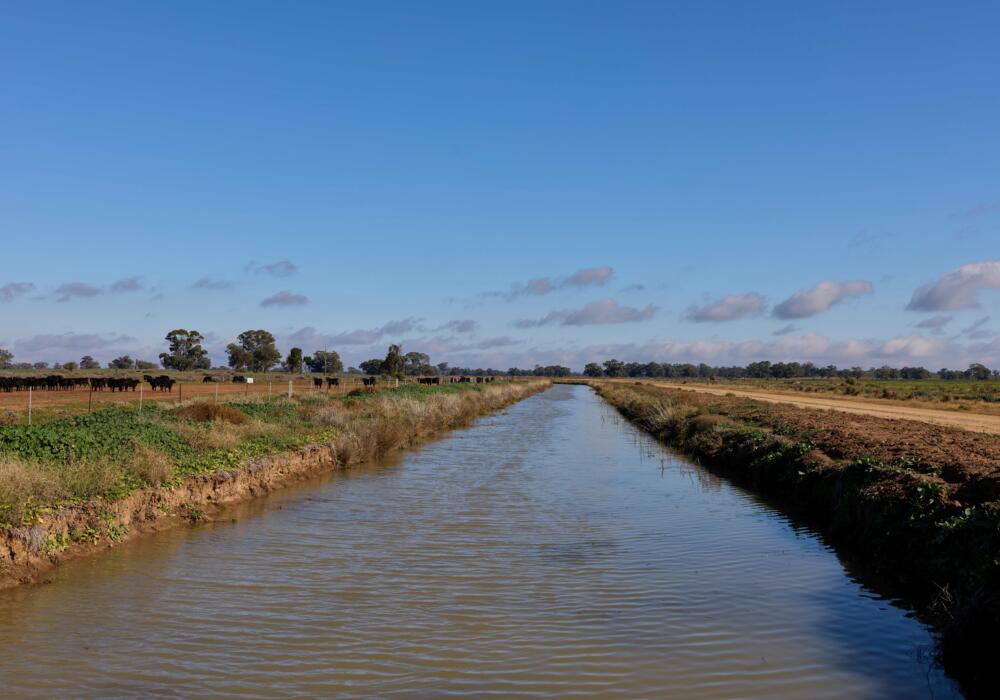
Between the properties, this year they will calve down more than 1000 pure Angus cows, run a high-performance flock of more than 10,000 composites (including 2000 ewe lambs), crop about 3400ha on the home farm and another 1300ha next door with a goodly lick of irrigation and use a 400-head on-property feedlot as part of their early weaning strategy and to finish off steers.
And right now the Gleeson family is just a little cock-a-hoop.
Because in March things were “looking very tight” until a healthy weather event at the end of that month gave them a great start and a recent 35mm has fallen at exactly the right time to keep things going.
Then they sent some B-Doubles south to AMG where their steers, dressing out between 450 kg and 460kg, sold up to $4160 per head.
Just before that some of his lighter lines went to MC Herd for similar prices and another load to O’Connors, which he says is paying a handsome premium for Te Mania Angus blood.
“I can’t recall the last time I saw things looking this good at this time of the year,” Locky pronounced.
“While the latest rains have been patchy, we certainly got the best of it and we’ve got things poking up all over the farm with crops and pasture,” he says.
These days Dennis and wife Judy share the load with son Locky and cropping manager Ash Amor – on the farm – and function at the behest of son Ryan, who from his Albury base runs the operation’s financials.
In a perfect world, Dennis admits that would work best with him telling Ryan what they want to do.
“In reality,” Dennis laughs, “it is most often a case of Ryan saying what we won’t be doing.
“But we have to work with that, he has a lot of big agricultural clients, and I don’t know if he is as tough with them as he is with us, but I guess he must be doing something right,” he adds.
“This year because of water prices and availability – we only got 27 per cent this year – we don’t have any rice, but we do have a lot of crops and pasture in, including corn and sorghum, which will go into the mix for our feedlot.”
While water is a challenge for everyone on the land, Colligen does have the fallback of three deep bores and four shallower ones going into the aquifer, which gives them an extra 1500 megs a year.
Colligen Creek Station got into Te Mania Angus genetics via Team Te Mania more than 20 years ago and has also spent the past decade converting Werai to the same pure genetics.
Taking seven or eight bulls a year on top of 100 per cent AI from the Team Te Mania program he says their spring calving herd is managed with heifers starting late July into August, and the cows run until the end of September.
An early weaning program uses the feedlot to keep the weaners separate from their mothers and Locky says they find it helps to steady them faster and adjust to their new feeding regime without distraction. After that, the steers and surplus females go in from September to October and the last of them have just left the property this week.
“The Team Te Mania program has always been great for us. We go down to the viewing days, and Sam Reid and Edward Gubbins know exactly the type of bull we are looking for and can basically tell us which ones we want to take home,” Locky explains.
“If we don’t like them, we can put them back and pick another, but they are great and always pick the bulls that are suitable.
“It’s a great way of updating your herd and getting really good genetics quickly – Team Te Mania is very progressive, forward thinking and terrific people, and they market things very well.”
But when it comes to sheep, there is no ‘us’ in ‘team’ and all the hard work is up to the Gleesons.
Their composite herd, which got a big kickstart about 15 years ago with the acquisition of Kismick West Composites near Corowa, NSW.
Since then the Gleesons have continued to refine their genetic strategy there and with a strong emphasis from Scottish Texels – with the occasional infusion of East Friesians and Border Leicesters for more size – have all but bred out the original Kismick strain.
Locky says the Texels come from WA, and they use both AI and rams, still occasionally adding a few outcrosses from time to time.
“We have almost finished lambing and there are lambs everywhere – in an average year we go about 135-140 per cent but I am thinking we will do even better this year,” he says.
“The adults cut about 3-4 kg of 32-micron wool, which isn’t worth much, but I was delighted this year to see the wool clip cover the cost of shearing for the first time in a long time.
“We also pick up a bit on the skins when they are processed, and most of our turnoff goes either direct to Coles and Woolies or to JBS.”
Colligen Creek also sells rams privately, with a lot going into Victoria’s Western District through agent Neville Guthridge.
“We aren’t trying to be at the top end of the market there, we sell rams for between $750 and $1000 at the moment.
“In our mob we use the top Texel genetics on our stud ewes, mostly via AI, and that ensures we keep delivering the style our customers want.”
And the customer service connection is critical for Colligen Creek – from its genetic partnership with Te Mania Angus and Texel studs in WA to its own relationship with its downstream buyers.
Get that right and it will get you a long way.
WRITTEN BY ANDREW MOLE