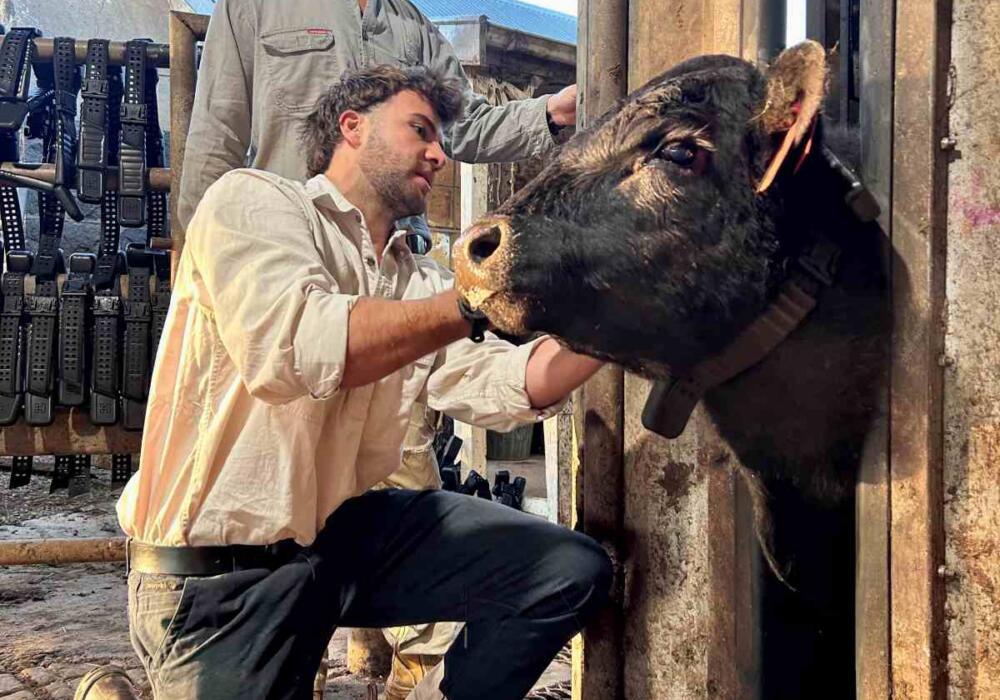
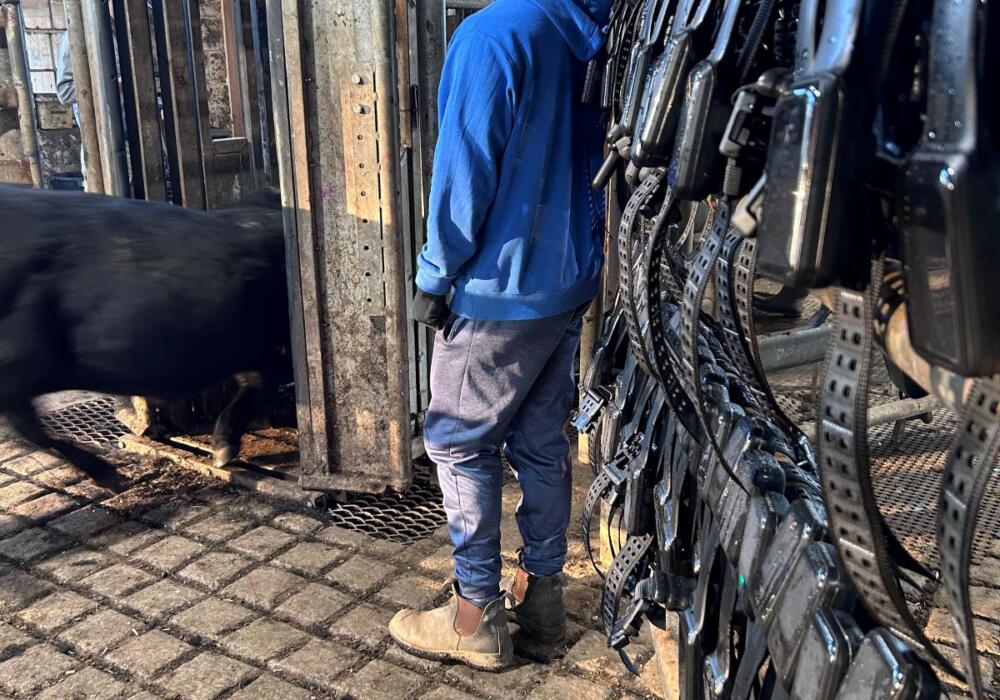
Te Mania Angus Merrang farm manager Edward Gubbins says even though 900 young bulls have only had their halters on for barely a week, he can already see they are going to have a significant and immediate impact on their management strategy.
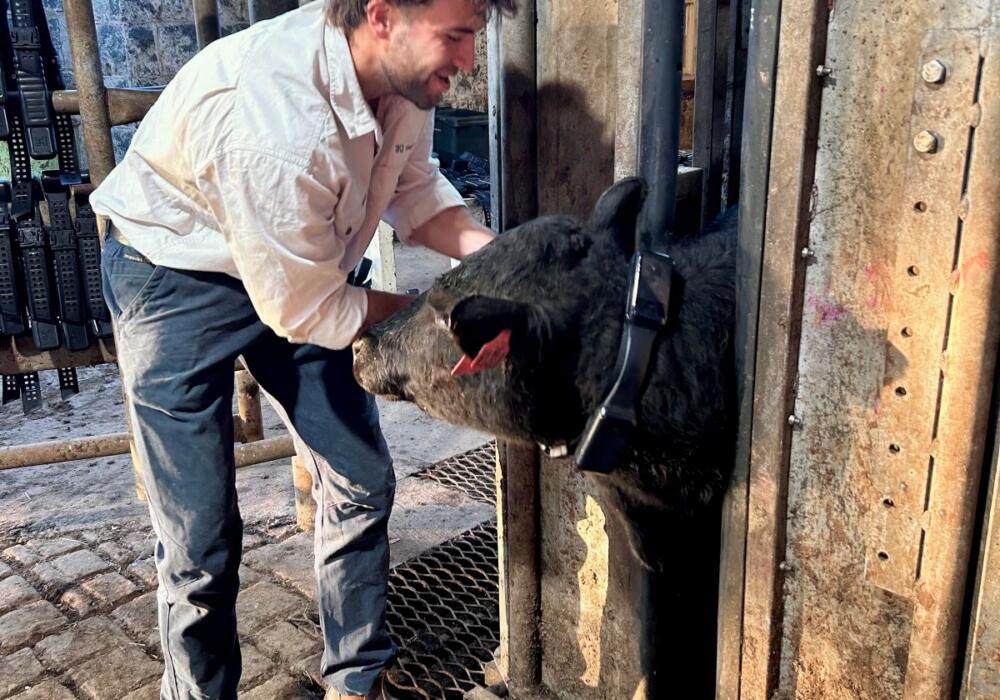
Edward says they have trialled the collars on all the yearling bulls and being able to see them respond to the training and work in the paddocks has “been amazing” I have no doubt the collars will reshape how we manage both our cattle and our pasture,” he says.
“And the data we collect throughout the whole process will be analysed and is bound to have a lot of influence on our long-term genetic progress.”

Halter and its cutting-edge collars are about to start ripping down the traditional fences of the Australian beef cattle industry. Literally.
The Kiwi founded business cut its initial teeth in the dairy industry but did not take long to realise what works in those tighter confines has unlimited potential in our vast grazing industry, which covers every part of the country.
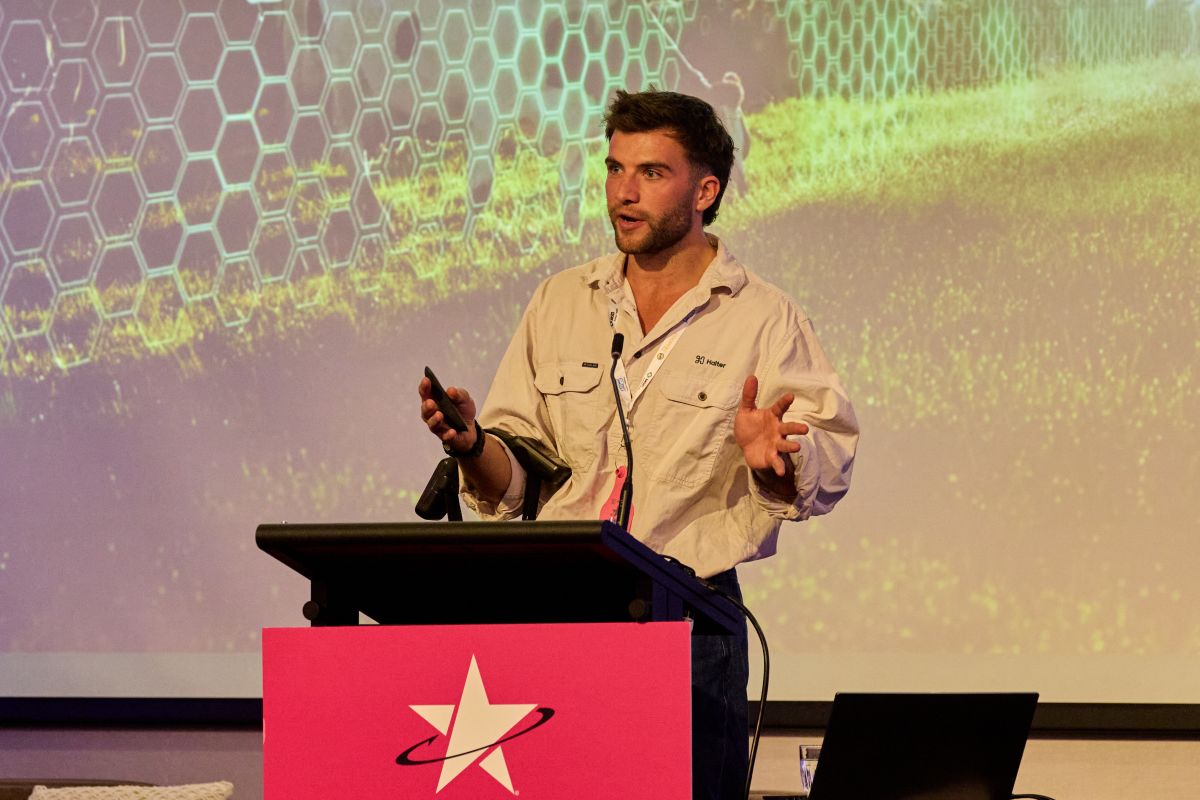
Halter business development executive and territory manager Travis McKenzie has told the Team Te Mania conference ‘navigating the next frontier – the new breeding intelligence’ in Moama, NSW, the message to producers is simple. “If you had an unlimited fencing budget, the flexibility to set up and move fences anywhere, each day, and ability to move your cattle with the press of a button, how would you farm?” Travis says. “At Halter, we think the answer lies in pasture management,” he says.
“Smarter rotational grazing makes better use of the land, boosts productivity and improves soil health.
“Productivity doesn’t have to come at the cost of sustainability. With the right tools, farmers can deliver both.”
And both Halter and Te Mania Angus are putting the money where their mouths are – in the past week the collars started going on every young bull in the Mortlake based seedstock enterprise.
Collars which, Travis says, are generating a picture of cattle behaviour, grazing patterns and pasture use at a resolution the industry has never had.
It can be accessed in real time, and Halter isn’t talking about a herd average, or a mob reading, Halter identifies and tracks every animal individually.
Originally driven by a tower connection with collars, Halter is now also powered by satellite functionally, soon to roll out in Australia. With half the world’s habitable land committed to farming, Travis says the most critical challenge is to produce more from no more, and possibly less.
“It takes just seven to 10 days to train your cattle to react to the collar, with its mix of sound, vibration and low pulse controls – and they are solar powered for life,” Travis explains.
“Once trained the collars can educate the cattle when and where to move, that when they hit the grazing boundary they need to turn and by having this pinpoint control you have the best chance ever of fully utilising your pasture,” he says.
“Right now, the average beef farm uses around 30 per cent of its available pasture but if you have complete visibility of your herd, and every animal in it, and can move them around by remote control, multiple times each day, you can see the potential.
“And it doesn’t need someone there moving them along, it lets you reallocate your labour resources to more profitable activities.
“In New Zealand we have clients now able to graze razorback hills you can’t even tackle on a motor bike, doubling capacity, and if you put up a drone over any Halter run paddocks, you can see where the virtual fences were by the grazing pattern.”
Travis says with the collars, your cattle suddenly become a serious pasture management tool.
Which means in a herd with calves you can limit the mothers while giving the calves the room to access a fresh pick, giving you the choice of greater weaning weights or earlier weaning as calves are doing better.
Halter enables producers to go beyond virtual fencing to an operational system driven by data.
It will even show you whether each cow is grazing, ruminating, walking, standing or lying down.
“We have seen weaner weight gains of 20kg, we know if a cow’s rumination dips, enabling you to do something about it and you can make even better business decisions,” Travis adds.
“Halter has sold more than 1 million collars since it went commercial in 2020 and now employs more than 450 staff across NZ, Australia and in 25 of America’s 50 states,” he says.
“We have only been in Australia this year, but in that short time our team has grown from five to 40 and with herds such as Te Mania Angus getting on board, the message is starting to get out to the wider beef industry.”
For more information, please contact Halter business development executive and territory manager Travis McKenzie at Travis.McKenzie@halter.co.nz
Story by Andrew Mole, Pictures by Emily McCormack