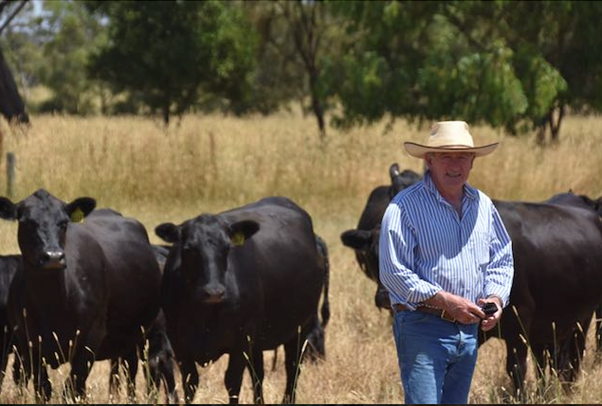
Team Te Mania Member Mike Carroll from Widgeegonga, Western Victoria shares his lessons from the 2024-2025 drought and how one important decision and proven Te Mania Angus Genetics improved the marbling performance of Angus feeder steers in his progeny test herd.
The past two years have tested every part of our cattle business. Rainfall records going back to 1900 confirm that this was the driest 24-month stretch recorded.
The first year didn’t feel too bad because we still had reserves of hay and silage to fall back on. But by the time 2025 arrived, those reserves were gone.
The cows were lighter, the paddocks were bare, and the cost of roughage across Victoria and South Australia had climbed to levels we had never seen. Hay sheds were empty, and the ones that weren’t held very expensive fodder.
FEEDING, RATHER THAN SELLING WEANERS
With little choice, we had to change the way we managed our young cattle. We tried very early weaning, leaned more heavily on containment feeding of cows, and made one decision that turned out to be more important than we expected: we put our weaners straight onto a total mixed ration.
In a normal year, we would yard-wean calves at 5-6 months at the end of February, feed them on silage through the autumn and place them onto pasture for winter, and then let the spring flush do the rest.
Under that routine, calves usually come off the cow at about 250kg and grow slowly – perhaps 0.75kg a day—before lifting to 2-3kg/day in the spring. That system gets them to around a 460kg pay weight by late spring and ready for feedlot entry.
2025 WAS A DIFFERENT YEAR
But in a year with no autumn break, none of that was possible. We either had to sell into the weaner market – which wasn’t offering much value – or feed them a total mixed ration (TMR).
When we sat down and worked through the numbers, the TMR option made more sense than expected, especially for the lighter calves.
The overall draft averaged close to 200kg when weaned in the first week of January. The lightest group was only three months of age when weaned and averaging around 160kg.
At those weights, their feed conversion is very efficient, and on a TMR they were gaining around 2kg/day. At a value of about 400c/kg of liveweight, that meant they were adding $8 of liveweight value each day. The ration cost about $6/day. The margin wasn’t huge, but it was positive – and in a drought year, a positive margin is worth a great deal.
There were some hard lessons in putting weaners onto a TMR.
Eventually we found a nutritionist in Jillian Kelly, through Ag Vic’s drought support initiatives who really understood beef weaner requirements. And then a feed company, McKenzie Ag, who is focused on beef and sheep. Lach McKenzie was running a similar system in his own beef enterprise.
The TMR growth rates were much higher than anything we’d achieved on silage or winter pasture, and the calves reached feedlot entry weight far earlier than usual.
FEEDLOT BUYERS CAUTIOUS
By July and August, they were around 460kg empty. That timing is very different from the usual annual rhythm, and when I contacted the feedlots we supply, the reaction was cautious.
Delivering 10-11 month-old steers raised concerns. Would they grow as well in the feedlot as older steers normally do? And even more importantly, would they be old enough at slaughter – 18-19 months – to express the level of marbling needed for premium programs?
We have a strong performance history with Rangers Valley feedlot over many years, and after some discussion they agreed to take these less than 12 month old steers.
RESULTS SURPRISED EVERYONE
The results told a story that surprised everyone. Almost half (49pc) of the carcases fell into the marbling score 3-5 range, and another 49pc produced marblinmfg scores 5 and higher.
These levels match the specifications for Rangers Valley’s Black Onyx and Black Market programs, which are the backbone of their premium Angus restaurant markets both in Australia and overseas.
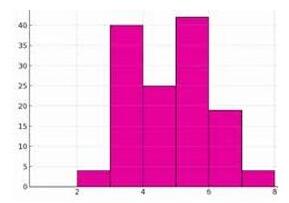
In other words, the young steers didn’t just hold their own – they performed extremely well. Their MSA index scores were also very strong, helped along by lower ossification scores, which younger animals naturally achieve. Only five steers failed to make it into the top 25 percent of the national MSA 2024-25 grainfed distribution.

MSA Index Distribution with the 2024-25 MSA grainfed percentiles
Source: MSA Annual Outcomes Report 2024-25.
The steers’ average daily gain in the feedlot was around the feedlot average. While this disproved conventional wisdom, there is logic: when cattle are younger, their growth is faster – it plateaus off as they approach their mature weight. Although there is no financial incentive for it yet, younger beef also has lower carbon emissions intensity.
GENETIC CONTRIBUTION?
No doubt genetics also contributed. We’re a progeny test herd aligned with Te Mania and our herd sits at the tenth percentile for IMF. We’ve been fortunate to have some very good bulls come to us after working at another progeny test herd.
This includes Te Mania Neon, a very high marbling bull and the high grainfed indexing bulls Reality and Raoul.
Over the years we’ve submitted carcase trait data from live scans and carcase chiller assessments on close to 1800 steers, all which contributes to improving the accuracy of EBVs and genomic testing.
WILL WEANING ONTO TMR BECOME THE NORM?
The performance of these younger steers raises the question of whether weaning calves onto a total mix ration should remain part of our program in normal years.
The ration looks more expensive when you only compare $/t, but the difference in feed conversion is striking. It takes roughly 6kg of TMR to put on 1kg of bodyweighty, while it takes about 11kg of home-grown silage to achieve the same gain.
And this is reasonably good silage testing at 10.5 MJME and 14.5pc protein.
Going down this path offers some other benefits. There’s the opportunity cost of the paddocks tied up for silage production – paddocks that could instead be carrying more cows and returning something closer to seven hundred dollars a hectare in gross margin.
There was no pink eye in the weaners on a TMR ration, whereas the bigger healthier weaners that started on silage had a 10-15pc incidence rate.
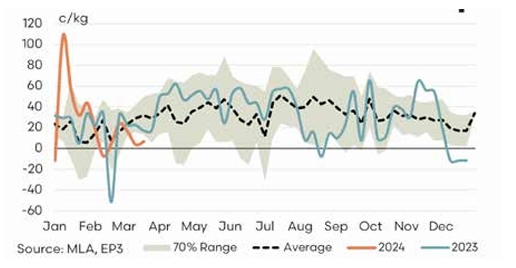
There also appears to be a winter Angus Feeder price premium that contracts as we hit the height of spring.
Analyst Matt Dalgleish shared the following analysis of the spread between Angus feeder steers and MLA’s all breed feeder index with our local Better Beef Group. We’ve certainly ended up ahead of budget thanks to a July to September Angus premium.